

Perched on a gleaming monument to death, three minimum-wage employees look out over a vast abyss.
Just another day of work at the Vessel.
A honeycomb-like structure at the center of the Hudson Yards development, the Vessel was met with immediate derision following its March 2019 opening. Designed by Thomas Heatherwick, the eight-level, 150-foot-tall attraction was swiftly mocked as a “staircase to nowhere.”
Snark gave way to anguish, however, following the deaths of three visitors who jumped from the Vessel’s elevated platforms. The site was first closed in early 2021, then briefly re-opened a few months later with insufficient new safety features, before a fourth suicide forced it to close again. Steel mesh was finally installed on all sides of the Vessel in 2024, allowing for a permanent re-opening.
Since first learning about the Vessel, playwright and actor Brendan George wondered about the employees forced to navigate such traumatic circumstances. In his new play The Vessel, now running at 59E59 Theaters through August 30, three young “ambassadors” take on the impossible task of identifying visitors who might be struggling with suicidal thoughts.
The project reunites George with director Peter Charney, following the duo’s critically acclaimed collaboration on interactive solo show A Eulogy for Roman in 2023. I spoke with George and Charney about crafting this existential comedy.
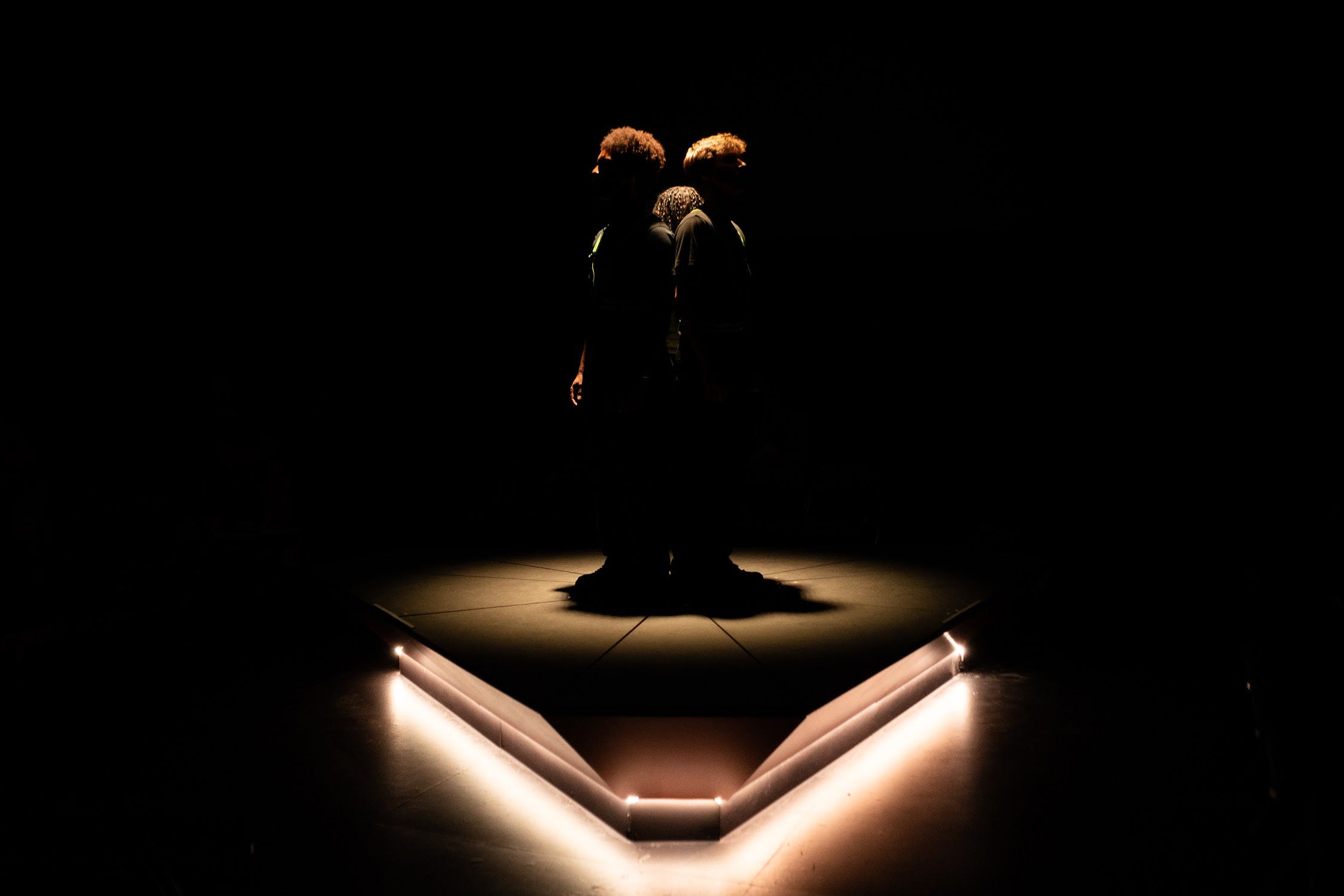
JOEY SIMS: Brendan, when did you first start to consider writing a play about the Vessel?
BRENDAN GEORGE (playwright): We were in Scotland doing the first run of A Eulogy for Roman at the Edinburgh Fringe. I’d written that show for myself, so I wanted to write for other actors. As I was reading about the Vessel, I became really curious about the people who work there. The ones who have to deal with the fallout of that sort of tragedy.
PETER CHARNEY (director): You quickly realize the Vessel is both a literal architectural structure, and also speaks to our larger anxieties around individual action against any sort of larger edifice.
BRENDAN: Very few audience members will have worked at the Vessel, but they will see themselves in these employees trying to navigate an oppressive and apathetic structure. Because none of us can escape these systems that continue to hold such a grasp over our lives.
JOEY: Right, while the specter of death looms very specifically for these three employees, that’s just an extreme example of the looming threat of violence we all face in today’s world.
BRENDAN: I’m 30 years old, and in my lifetime, the idea of a truly safe environment feels like a myth that was busted long ago. I can name by location Sandy Hook, Aurora, Colorado, and Orlando, all these places where safe, peaceful environments were shattered one after another. You just take on this implicit understanding that whether you are in a park, or a movie theater, or a school, violence and catastrophe can occur. So yes, this play extracts that and theatricalizes it so that we can confront it more explicitly, but they are just living a more extreme example.
But also, the play is funny. [laughs] There’s lots of laughs, I promise! It’s an existential workplace comedy.
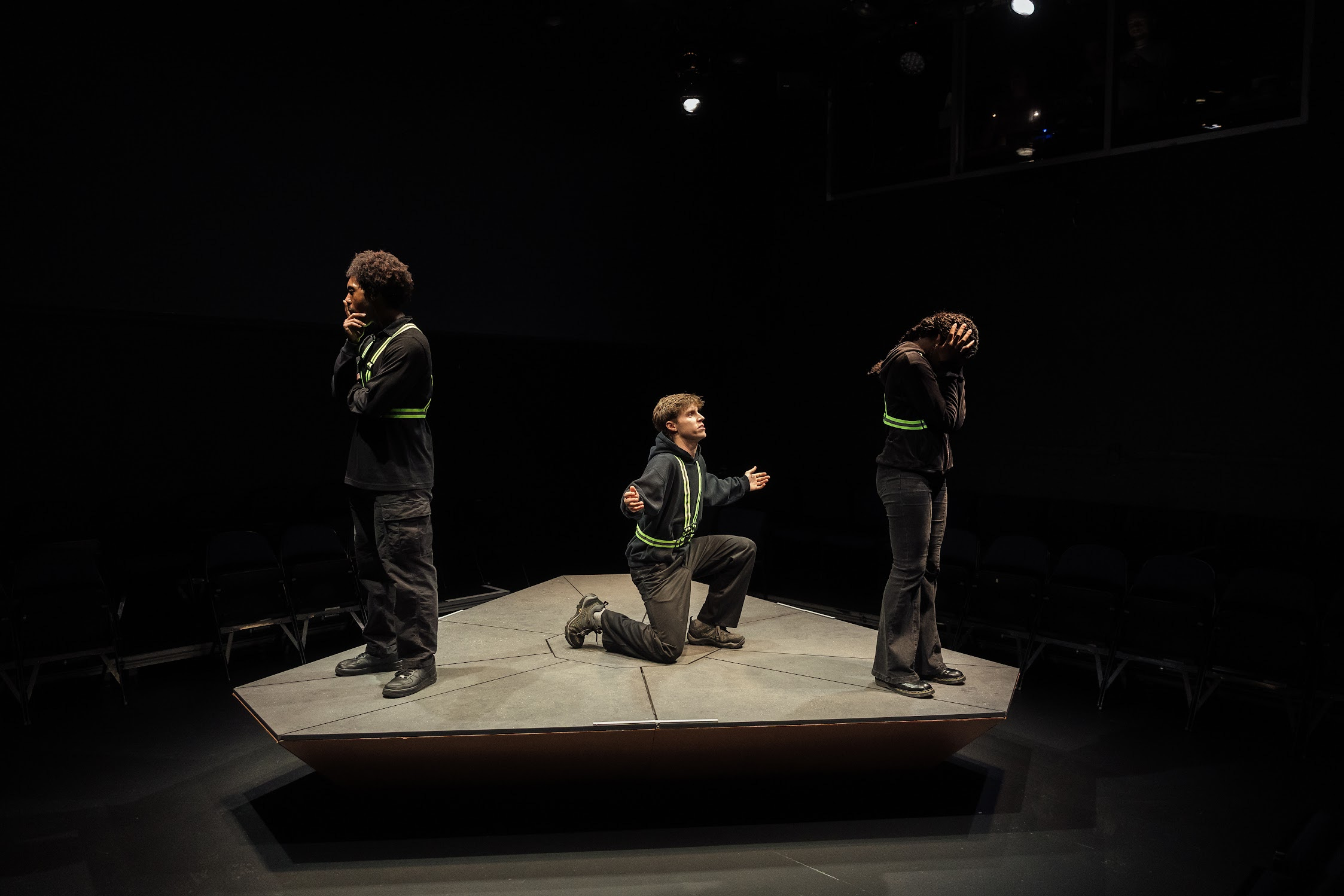
JOEY: To your knowledge, is it actually in the job description at the Vessel to watch for people who might be experiencing a mental health crisis?
BRENDAN: I don’t know how explicit or implicit it is. From the research I was able to gather, we saw the language of “intentional observation” being used. Which felt very loaded. So I think that there’s a suggestion of surveillance and safety. In our play, the character of Drake is the most adamant and outspoken about that responsibility, of looking out for suspicious or potentially concerning behaviors. Which is a very slippery task.
PETER: And there were preventative measures taken after each of the closures that we do reference.
JOEY: But your play ends in 2021, so it entirely takes place before the higher barriers went up.
PETER: Yes, it’s set before that. But we track, for instance, when they added a buddy requirement, and when they started charging for admission. We place those efforts alongside the effort that these workers, three caring individuals who are all trying to do good in this world, put into the job. Where does the responsibility ultimately lie?
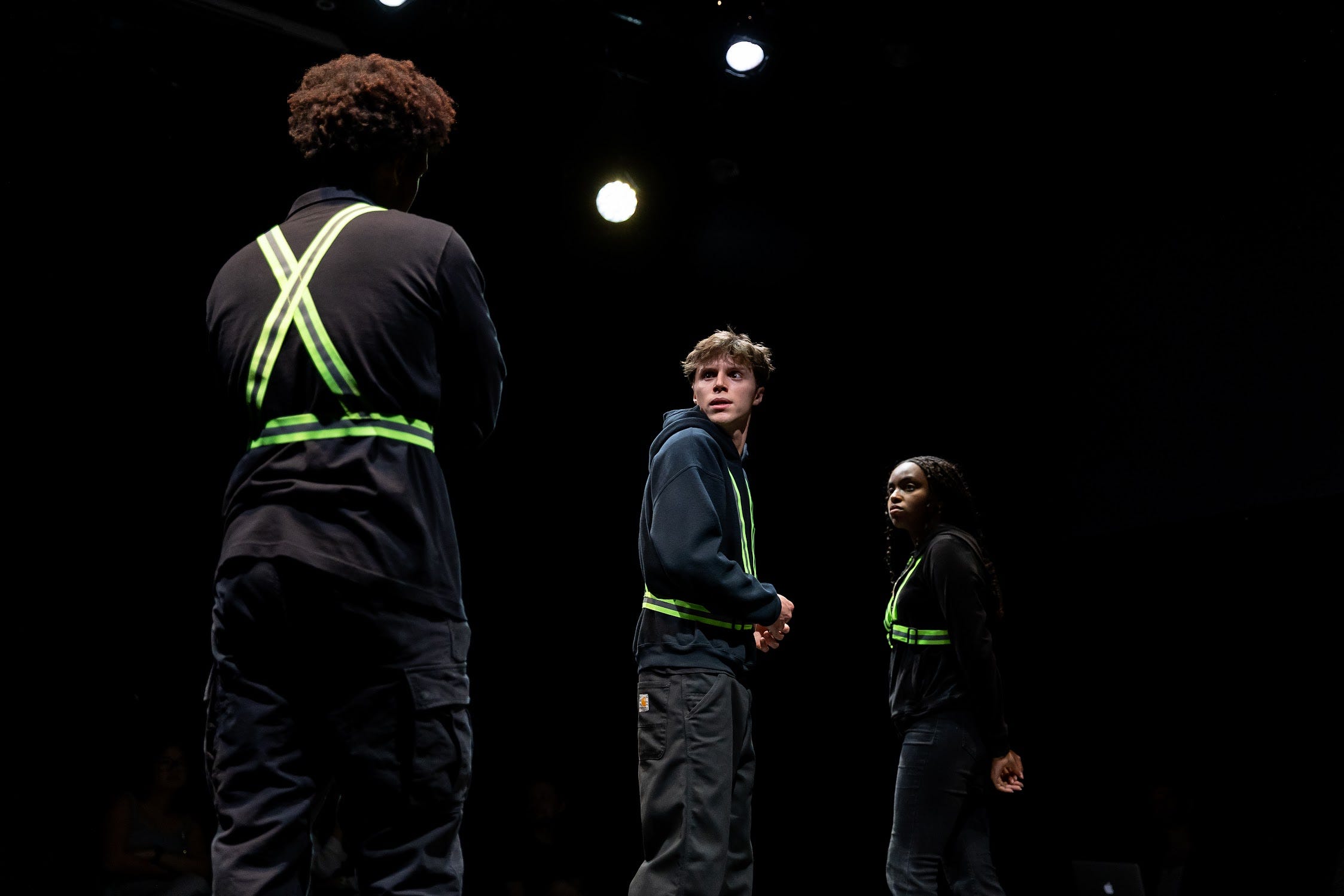
JOEY: That’s something I love about the play: all three of the employees—Drake, Missy and Viggo—want to try and help. None of them are indifferent to the task before them as employees of the Vessel.
BRENDAN: All three are trying to solve this existential problem, but each comes at it with a different worldview. Viggo is the anarchist, “let’s burn it all down” type. Drake is more of a pragmatist—he agrees the system is fucked up, but argues for living as successfully as you can inside of that structure. And then Missy doesn’t think the system is broken at all, and sees it as the individual’s responsibility to find joy in the everyday. They each exist on three separate points of this triangle. And then we see how witnessing a death at their workplace shifts all of their viewpoints.
JOEY: They also gradually learn how to look out for warning signs in each other.
PETER: I hope the audience might have a subconscious experience that mirrors the characters, of looking at a person and trying to make a judgment call about their psychological space. And understanding how impossible that is.
BRENDAN: Suicide remains very taboo to name, so I hope that the play advocates for more conversations to be had about it. For it not to be relegated and shied away from.
PETER: Especially inside of these systems that are moving us more and more toward an individualistic way of life. The bond these three people find, and their ability to share something that is a struggle for them, is enough of an act of bravery. Maybe that isn’t going to save every single person. But you might save one person.
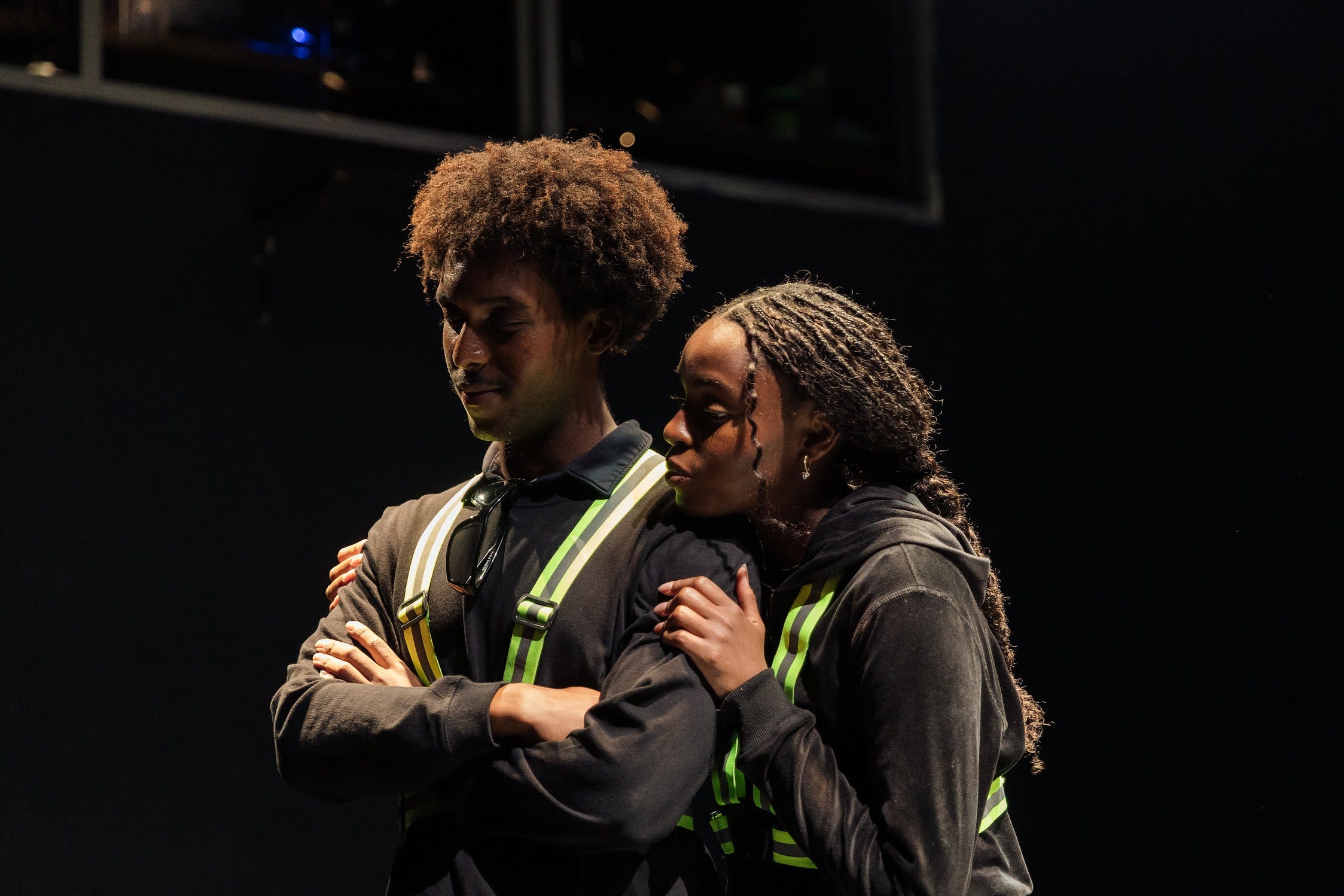
JOEY: You visited the Vessel during rehearsals. What does it feel like to be there now?
BRENDAN: I mean, you can now pay $50 to take a workout class, run by Equinox, where you run up and down the steps of the Vessel and do push-ups on the platforms. The architecture has no feeling. It is the way that we relate to it that makes it a weapon, or a monument, or whatever it may be in-between.
I do think that the story is getting a little bit lost to time. It feels like it’s just part of an old history now. But I was still unnerved. For those who know, I found it a very unnerving and intense experience to be at the edge.